Context, problem statement, challenges and the gap
LT
Presented byLe Quoc TrungAI Engineer, Techcombank
01 Current process
Today’s SME credit process, and where it slows down
Re-typing statements and late reconciliation inside appraisal cause the delays and the rework loop.
OriginationRM collects the pack
AppraisalAppraiser builds the report
ApprovalApprover or committee
DisbursementConditions checked
MonitoringCovenants, early warning
Inside appraisal
1Receive packScans, photos and paper
2Check completenessWait for missing documents
3Re-type statementsHundreds of lines into Excel by hand
4Pull CIC, reconcileMismatches surface late
5Write the reportThen send for approval
Where Credit Orchestrator steps in
Sent back for rework when figures do not reconcile
BottleneckAutomated and checked by the prototypeProcess map from public regulation and practitioner interviews; no measured baseline yet
01 Industry background
Vietnamese banks have digitised the front office; the credit middle office remains manual
Account opening and payments are digital; SME credit still means reading scans and re-keying figures.
NGÂN HÀNG TMCP …SAO KÊ TÀI KHOẢN
Chủ tài khoản: CÔNG TY TNHH GỖ KIM LONG · Kỳ: 01/2026 – 06/2026
Tháng
Ghi có
Ghi nợ
Số dư
01/2026
6.412.000.000
5.980.000.000
2.114.000.000
02/2026
4.876.000.000
5.102.000.000
1.888.000.000
03/2026
7.205.000.000
6.640.000.000
2.453.000.000
04/2026
6.930.000.000
7.012.000.000
2.371.000.000
SỞ KẾ HOẠCH VÀ ĐẦU TƯ TỈNH BÌNH DƯƠNG PHÒNG ĐĂNG KÝ KINH DOANH
GIẤY CHỨNG NHẬN ĐĂNG KÝ DOANH NGHIỆP
CÔNG TY TNHH HAI THÀNH VIÊN TRỞ LÊN
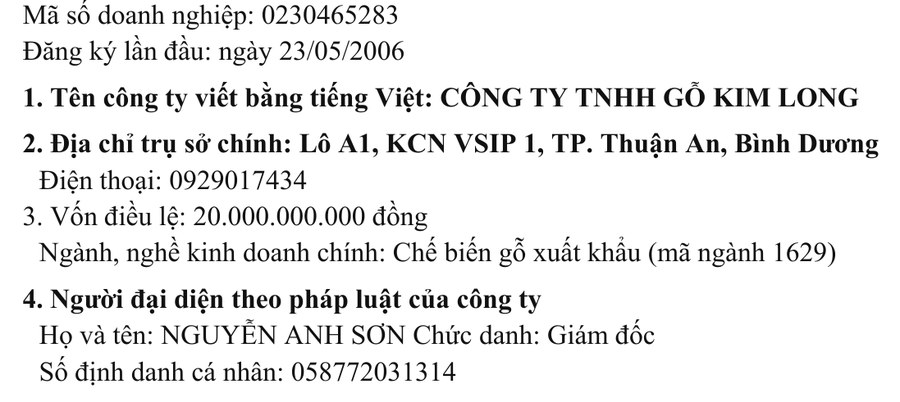
Mã số doanh nghiệp: 0230465283 Đăng ký lần đầu: ngày 23 tháng 05 năm 2006
1. Tên công ty: CÔNG TY TNHH GỖ KIM LONG 2. Địa chỉ trụ sở: Lô A1, KCN VSIP 1, TP. Thuận An, Bình Dương
3. Vốn điều lệ: 20.000.000.000 đồng 4. Người đại diện theo pháp luật: NGUYỄN ANH SƠN
PHÒNG ĐĂNG KÝ KINH DOANHBÌNH DƯƠNG
Mẫu số B01-DN (Ban hành theo TT 200/2014/TT-BTC)
BẢNG CÂN ĐỐI KẾ TOÁN
Tại ngày 31 tháng 12 năm 2025 · Đơn vị tính: đồng
Chỉ tiêu
Mã số
Số cuối năm
Tiền và các khoản tương đương tiền
110
5.871.000.000
Các khoản phải thu ngắn hạn
130
12.353.000.000
Hàng tồn kho
140
28.873.000.000
A. TÀI SẢN NGẮN HẠN
100
49.512.000.000
B. TÀI SẢN DÀI HẠN
200
24.968.000.000
TỔNG CỘNG TÀI SẢN
270
74.480.000.000
C. NỢ PHẢI TRẢ
300
44.881.000.000
D. VỐN CHỦ SỞ HỮU
400
29.599.000.000
TỔNG CỘNG NGUỒN VỐN
440
74.480.000.000
Người lập biểuHoa
Kế toán trưởngT. Minh
Giám đốcA. Sơn
CÔNG TY TNHH GỖ KIM LONG* BÌNH DƯƠNG *
Credit appraisal fileA typical pack, read and re-typed by hand · synthetic example
A typical SME credit pack
Financial statementsCircular 200 / 133 forms
Business registrationlegal identity and owners
Bank statementssix months of inflows
Collateral valuationappraised asset value
Tax filingsVAT and corporate tax
Contractssales and supply terms
01 Industry background
Three shifts make this the right moment
Models read unseen layouts, open-weight models run in-house, and PDPL 91/2025 applies from 1 January 2026.
01
→
CompanyGỗ Kim Long✓
Tax code0230465283✓
Total assets74.48 bn✓
Capital20.0 bn✓
Foundation models read unseen layouts
No templates needed: a model reads any statement or certificate, which removes the limit that held back OCR and RPA.
02
Bank data centre
Open-weight modelon-premise GPU
×
No external API
Open-weight models run in‑house
Capable models now fit on a bank’s own servers, so automation is possible where data cannot leave.
03
PERSONAL DATA PROTECTION LAW
JAN
1
2026
IN FORCE
Regulation tightened
With PDPL 91/2025 in force from 1 January 2026, where data is processed is an architectural question.
01 Industry background
The legal frame tightened between 2020 and 2026
From Circular 09/2020 to PDPL 91/2025, where customer data is processed became a legal design choice.
ConsentPurpose limitationRecords of processingCross-border transferDecree 356/2025
2025
PDPL 91/2025
Data protection becomes statute, with Decree 356/2025
Statute, not decreeImpact assessmentLegal basis per taskWhere data is processed
1 Jan 2026
PDPL in force
Consent, purpose and cross-border rules now apply
01 Problem identification
The gap: built for Vietnamese credit practice and measured
Banks get proofs of concept; they rarely get a design grounded in local practice with every component measured.
AI credit products exist, and usually reach a bank as a proof of concept. What a bank rarely gets is a design grounded in Vietnamese appraisal practice, with measured quality for every component.
The proposition, in one line
A governed orchestration layer built from Vietnamese credit practice, with every component measured: extraction, red flags, masking and the report.
Model capability
Credit OrchestratorVietnamese credit practiceMeasured per componentGoverned, human decides
Credit workflow
01 Problem identification
Four observations sharpen the problem
Banks want AI, but data rules, governance cost and repeated reviews block each new workflow.
Four observations
1
“We want AI”
AwarenessDeployed
Awareness is high
Banks know about AI and want it.
2
Bank
Bigger model
A bigger model does not help
A model the bank cannot legally send data to adds nothing.
3
GovernanceFlow A
GovernanceFlow B
GovernanceFlow C
governance cost ×3
Point solutions do not pay back
One workflow cannot amortise the governance cost.
4
DataModelAuditOversight
The problem recurs
Every new workflow reopens data, model, oversight and audit questions.
01 Four challenges, four theories
Four challenges, each needing a different part of the framework
Manual burden, data residency, unused outside information and no tiering method each need a part of the framework.
Challenge 1 · Organisation
hours / file
Manual processing burden
Analysts spend their judgement on data assembly. Longer cycle times, more rework, and headcount that grows linearly with volume.
Challenge 2 · Environment
Bank
Frontier API
Data cannot go to external models
PDPL and banking secrecy make unrestricted frontier-API designs unimplementable. Fully on-premise designs accept a lower capability ceiling.
Challenge 3 · Technology
NewsCourtsRegistry
?
External intelligence unused
Sector news, litigation and registry changes are public, but nobody has a mechanism to gather, verify and attribute them quickly.
Challenge 4 · Technology
?
S1S2S3S4F1
failed pilotuneconomic
No way to pick a model tier
Banks swing between over-specifying (uneconomic or non-compliant) and under-specifying (a failed pilot).
01 Four challenges, four theories
Four theories ground the design
TOE, task-technology fit, levels of automation and dynamic capabilities shape each design choice.
TOE · Tornatzky & Fleischer, 1990
TechnologyOrganisationEnvironment · blocks
Adoption stalls on the environment
So the compliance guardrail is a first-class layer.
Task-Technology Fit · Goodhue & Thompson, 1995
ExtractS2✓
ResearchF1✓
MemoF1✓
Fit beats raw capability
Pick tiers per task and evaluate per task.
Levels of automation · Parasuraman et al., 2000
AcquireAI
AnalyseAI
DecideHuman
ActHuman
Automate acquisition and analysis
People keep decision selection.
Dynamic capabilities · Teece, 2007
CreditTradeLeasing
Shared framework
Guardrail · Harness · Skills
Build a framework, not an app
Each new workflow is cheaper than the last.
01 Existing solutions
Document extraction is commoditised; the governance layer above it is not
Vendors solve extraction; residency, a binding review gate, tier choice and reuse are still open.
Requirement
Existing solutions cover it?
What this project adds
Extract structured data from mixed documents
Yesinternational and domestic providers
Adopted, not reinvented
Reason across documents
Partlyrule-based aggregation
Synthesis under inconsistency; reconciling conflicting sources
Data residency as an architectural property
Optiona deployment setting
An egress policy layer with per-event audit evidence; sovereign or masked-hybrid by design
Human authority over the decision
Rarelyan optional review step
A gate that cannot be bypassed, with supervisory evidence and an amendment measure
Pick a model tier for the task
Novendor-chosen, opaque
A repeatable method for the minimum sufficient tier per task
Reuse across workflows
Partlytemplates tied to doc types
A harness with persistent memory and a reusable skill library
credit pack
L3 · Compliance guardrail
mask · egress scan · review gate
L2 · Orchestration harness
cases · reconciliation · skills
L1 · Task capabilities
extract · research · draft memo
a person decides
02
MBA Capstone 2026 · Group 5
Part 02 of 06
Our approach
Research question, framework, strategies and evaluation
LT
Presented byLe Quoc TrungAI Engineer, Techcombank
02 Research question
What deployable architecture lets a bank use modern AI in a credit workflow while meeting data protection, producing audit evidence and keeping human accountability?
And what is the minimum model capability it needs?
02 Research question, objectives, method
Four objectives, evaluated with five measures
Design Science Research: four objectives, judged on five measures from field accuracy to boundary integrity.
O1
Manual hours / file
Quantify the manual burden
Measured baseline from interviews and file sampling
Measured by: cycle-time baseline
O2
L3 Guardrail
L2 Harness
L1 Capabilities
Specify the framework
Capabilities, harness, compliance guardrails
Measured by: boundary integrity (target 0)
O3
15 files
Build and evaluate a prototype
One end-to-end workflow: accuracy, cycle time, amendment rate
Measured by: field accuracy, cycle time, amendment rate
Problem characterisation → Artefact design → Build and demonstrate → Evaluate
Five measures
Field accuracy · Cycle-time reduction · Human amendment rate · Boundary integrity (target 0) · Capability frontier
02 The artefact
A three-layer framework enforces the institutional data boundary
Capabilities do the work, the harness runs it and does the maths in code, the guardrail masks, logs and gates.
L3
Compliance guardrail
De-identification with a typed token vault inside the perimeter · re-identification · egress scanner that blocks on any hit · immutable call log with payload hashes · blocking human review gate · per-task routing policy
L2
Orchestration harness
Case store · parallel fan-out across documents · deterministic number and unit normaliser · reconciliation and credit-ratio skill (current ratio, D/E, interest cover, net margin, LTV, loan-to-revenue + 5 cross-document checks) · benchmark harness
L1
Task capabilities
Extraction against Circular 200 row codes · vision transcription in the perimeter · public-only sector research · credit-memo drafting that ends in a recommendation, never a decision
Design rule (iteration 3)
Code handles facts, policy and numbers. The model reads and writes. A named person decides.
credit pack
masked only
Bank perimeter
L3
Guardrail
mask · egress scan · log
L2
Code
facts · policy · numbers
L1
Model
reads and writes
review gatea named person decides
Built on
Serverless web appOpen-weight model inferenceSQL databaseGoogle sign-in381 automated tests
02 Strategies
Two ways to resolve capability versus data residency
Approach 1 keeps everything inside with less capability; approach 2 gains capability at a residual masking risk.
Bank perimeter
nothing leaves
Approach 1
Sovereign on-premise
All inference on bank infrastructure with open-weight models. Compliant by construction.
Our hypothesis: route each task to the right place
Extraction and report drafting stay inside on sovereign models; only public sector research goes out.
Inside the bank perimeter
External frontier model
SovereignEverything stays inside
ExtractS3
MemoS3
Researchoff
HybridEverything goes out, masked
ExtractF1
masked
ResearchF1
public
MemoF1
masked
OrchestrationEach task to its place · “task-routed” in the reportrecommended
ExtractS2 · 8B
ReportS3 · sovereign
fact sheet
ResearchF1
public only
Hypothesis: extraction and report drafting both touch customer data, so both stay inside the bank on sovereign models. Only sector research, a public-only query, may use an external model. An all-or-nothing choice becomes a per-task routing decision.Prototype runs also drafted the memo on F1 from a masked fact sheet (Finding 5: 0 of 90 external calls carried an identifier). The pilot recommendation keeps drafting inside; report quality is re-measured on the sovereign tier in Phase 0.
02 With orchestration
The same process with orchestration: people check and decide
Steps 1–4 are automated inside the bank; the appraiser reviews every field and owns the report.
OriginationRM uploads the pack
AppraisalAppraiser checks and decides
ApprovalFour-eyes approval, unchanged
DisbursementConditions checked
MonitoringCovenants, early warning
Inside appraisal
1Read the packDocuments classified inside the bank
2Flag missing documentsGaps listed on day one
3Mask and extractEvery field with its source; identifiers never leave
4Reconcile in codeCross-document checks, ratios, red flags
5Review gate, then reportAccept, amend or reject each field; numbers checked
Orchestrated by Credit Orchestrator · inside the bank
Mismatches flagged at step 4, before the report, not at approval
Automated, every output traceableHuman decisionTarget workflow from the prototype; time savings not yet measured
02 With orchestration · Inside the automated steps
Behind the automation: one orchestrator, specialised agents
Each agent has one job and one model tier; every output converges on the appraiser’s review gate.
Credit packscans, PDFs, statements
OrchestratorL2 harness · routing policy · case store · skill library
Case filestatus, call log, payload hashes
Intake agentclassify · check completeness
In-perimeter model 12-family pack checklist
Missing-document list
Extraction agentread every field with its source
S2 · 8B, in-perimeter Circular 200/133 row codes
Fields + source + confidence
Reconciliation skillcode only, no model
Unit normaliser · ratios 5 cross-checks · policy engine
Ratios and red flags
Research agentsector and public records
F1 external model public-only query · egress scan
Sector brief with sources
Report agentdraft the 10-section report
S3 sovereign model fact sheet · number check
Draft report, figures traced
Appraiser · review gateaccepts, amends or rejects · edits the report
Appraisal reportto the approver, four-eyes unchanged
Model agent, inside the bankCode skill, no modelExternal model, public data onlyModel, knowledge and toolsL3 guardrail on every hop: mask · egress scan · call log
02 Evaluation setting
A controlled experiment on a synthetic corpus with engineered heterogeneity
15 synthetic files, 375 scored fields, 3 layouts, 3 noise levels and 11 planted red flags.
15
synthetic SME credit files, in Vietnamese
6
documents per file: registration, B01-DN, B02-DN, bank statement, collateral valuation, loan application
375
scored ground-truth fields (25 per file)
3 layout styles
A table, VND, Vietnamese separators B bilingual table, US separators C narrative, in millions of VND
3 scan-noise levels
0%, 4% and 10% diacritic loss on letters (digits untouched)
Five model tiers, from 3 to 120 billion parameters
Four sovereign tiers and one masked external stand-in, with every call logged.
Five model tiers
Tier
Model
Role
S1
Llama 3.2 3B
Sovereign small
S2
Llama 3.1 8B FP8
Sovereign medium
S3
Gemma 4 26B-A4B
Sovereign large (MoE)
S4
gpt-oss-120b
Sovereign XL (MoE)
F1
Llama 3.3 70B FP8
External frontier stand-in, masked only
Every call is logged with tier, route, data class, payload size, masked count, scanner hits, decision, latency and payload hash.
Field accuracy by tier
S176.8%
S299.5%
S397.3%
S484.8%
F1100%
0/90
identifiers leaked
10/10
invented figures caught
13–17s
automated steps per file
03
MBA Capstone 2026 · Group 5
Part 03 of 06
Seven findings
Model tiers, determinism, red flags, masking, cycle time and business depth
VH
Presented byNguyen Viet HungHead of AI Product, Vinsmart Future
F1 Finding 1
Llama 3.1 8B inside the perimeter is sufficient for extraction at 99.5% accuracy
S2 got 373 of 375 fields right, two behind the external model; the larger S4 scored 84.8%.
Field accuracy, iteration 2 (375 fields per tier)
dashed = 99% threshold
S1Llama 3.2 3B
76.8%
S2Llama 3.1 8B FP8
99.5%
S3Gemma 4 26B-A4B
97.3%
S4gpt-oss-120b
84.8%
F1Llama 3.3 70B FP8
100%
Tier
Correct
Median s / file
Failed docs
S1 Llama 3.2 3B
288
1.5
0
S2Llama 3.1 8B FP8
373
10.5
0
S3 Gemma 4 26B-A4B
365
43.2
0
S4 gpt-oss-120b
318
8.2
0
F1 Llama 3.3 70B FP8
375
4.9
0
2
fields of 375 separate S2 · Llama 3.1 8B (in-perimeter) from F1 · Llama 3.3 70B (external)
Non-monotonic frontier
S4 · gpt-oss-120b loses to S2 on accuracy: it converted units itself despite instructions, inflating narrative amounts a thousandfold.
S1 · Llama 3.2 3B is unreliable on numeric tables (59% on balance sheets) and returned no bank-statement fields.
F2F3 Findings 2 and 3
Moving unit conversion into code raised accuracy
Doing unit conversion in code lifted S2 from 94.4% to 99.5%.
Accuracy before → after the deterministic unit skill
Axis 75% to 100%
Iteration 1 · model converts unitsIteration 2 · code converts units
The balance sheet says · SME-011
Iteration 1 · the model converts
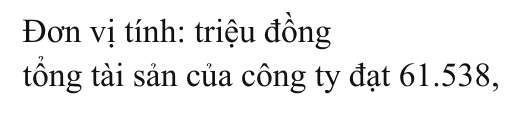
61,538,000 đ
×1,000 times too small (S2, live run)
Iteration 2 · code converts
model reads 61.538 + triệu đồng code: 61.538 × 1,000,000
61,538,000,000 đ
✓exact and auditable
Iteration 1's dominant error was mis-scaling by 1,000, in both directions, on "Đơn vị tính: triệu đồng". S3 dipped because it returned nothing for one narrative balance sheet; S4 ignored the new instruction.
Design rule: if a transformation can be specified exactly, the harness should do it. Fewer errors, auditable, and a lower minimum tier.
F2F3 Findings 2 and 3
Layout, not scan noise, drives the remaining errors
S2 scored 100% on clean files and 98.7% on the noisiest; narrative layouts caused what remained.
Three layout styles, as the model received them · benchmark files
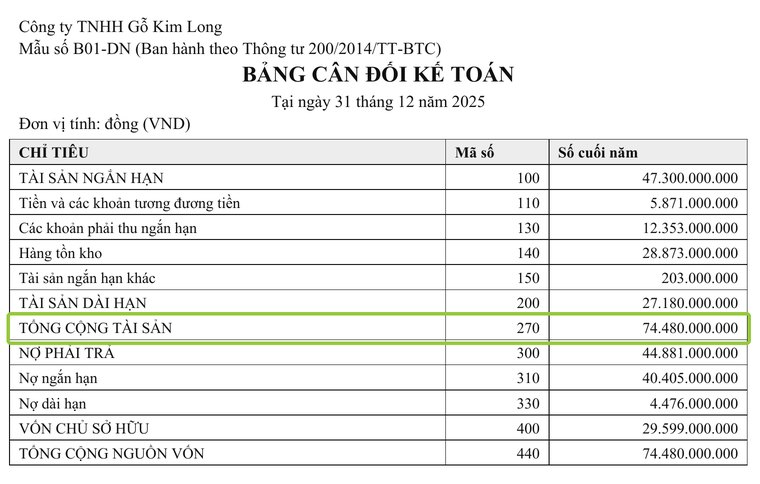
ATable · VND separators
zoom · the line the model must read
SME-009 · Gỗ Kim Long · synthetic
74.480.000.000S2 100%all tiers ≥ 99% except S1
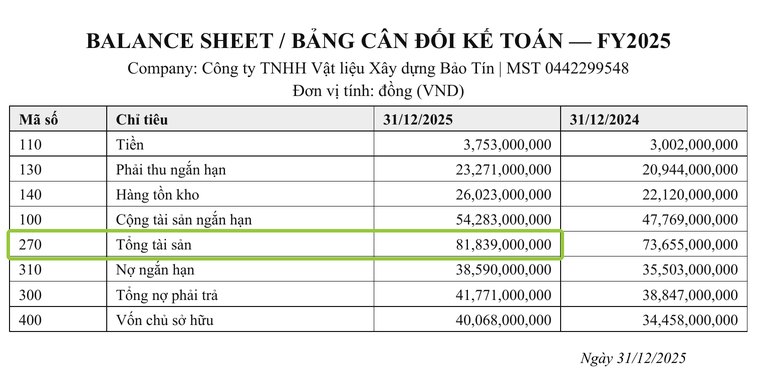
BBilingual · US separators
zoom · the line the model must read
SME-010 · Bảo Tín · synthetic
81,839,000,000S2 99.2%all tiers ≥ 99% except S1
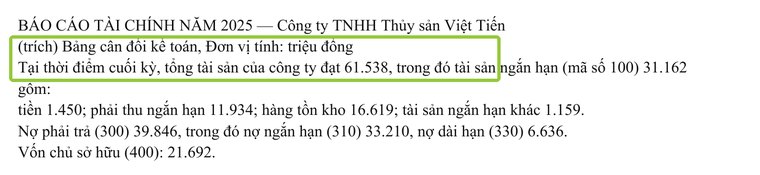
CNarrative · in millions
zoom · the line the model must read
SME-011 · Việt Tiến · synthetic
61.538 triệu đồngS2 99.2%S3 92% · S4 54.4%
Accuracy by layout, iteration 2
100%S2 on clean files
98.7%S2 on the noisiest files
Residual error sits in style C: figures in running text, in millions. Scan noise has no consistent effect, so validate per document family, not on a generic benchmark.
F4 Finding 4
Red-flag recall was complete, but precision on the recommended tier was 50%
All 11 planted flags were caught, but half of S2’s alarms were false, mostly charter capital vs equity.
Recall and precision by extraction tier · 11 planted flags
RecallPrecision
Four deterministic checks
Declared revenue vs audited income statement
Charter capital: application vs registration
Bank inflows far below monthly revenue
Loan-to-value above 100%
Root cause of S2's 11 false alarms
Registration certificate
Vốn điều lệ20.000.000.000
Balance sheet · code 400
Vốn chủ sở hữu29.599.000.000
charter_capital =
29.599.000.000
equity read as charter capital
False alarm: “charter capital does not match the certificate”
A semantic disambiguation error, not a reading error.
A false alarm costs seconds at the gate. A missed flag can cost a credit loss.
F5 Finding 5
The boundary held: no identifier left in 90 external calls
0 of 90 external calls carried a customer identifier; no call needed blocking.
0 / 90
external calls carried a ground-truth identifier. No call needed blocking. Pass on the corpus.
Checked identifiers
Company names, tax codes, legal reps, national IDs, phones, addresses, bank accounts
What an external call looks like
Bank perimeter
Sector research
“wood processing, VSIC 1629, Binh Duong”
✓
Memo drafting
fact sheet: [ORG_1] · ratios · flags
✓
Masked extraction
[TAXCODE_1][PERSON_1] …
✓
egress scanner 0 hits
F1 frontiersees only tokens or public facts
Every call is logged with route, data class, masked count, scanner hits and a payload hash.
F5 Finding 5
But de-identification is the weakest control
Masking reached 95–100% on tuning cases but only 73% on a held-out set written in advance.
Adversarial red-team: de-identification recall
Tuning · rules v1
55%
Tuning · rules v2
95%
Tuning · rules + NER
100%
Held-out · rules
23%
Held-out · rules + NER
73%
The held-out set of 20 cases was written before v2 was evaluated, to guard against overfitting. Hand-written rules overfit; a learned detector is needed, and even that is not enough to be the only control.
Missed on held-out (6 of 22)
Người đại diện: [PERSON_1] Số CCCD: 001-203-004567ID with dashes ĐT văn phòng: (024) 3825 1234Hanoi landline Khách hàng lớn: Cty Gỗ KLabbreviated name Xe giao hàng: 51C-123.45vehicle plate Cổ đông: [PERSON_2], Trần V. Bình, Lê T. Hoashareholder list Vay vốn tại [ORG_7]bank’s own name, over-masked
maskedmissedover-maskedillustrative lines, real miss categories
Prototype Inside vs outside the perimeter
Only tokenised content crosses the institutional perimeter
Inside, the real certificate; outside, tokens only. The token vault never leaves the bank.
Inside the bank
Business registration · original
SME-009 · page as stored in the bank · synthetic
Token vaultstays inside, never sent
24occurrences masked
17entities
7classes
Masked payload · what F1 sees
Tên công ty: [ORG_1]
Mã số DN: [TAXCODE_1]
Địa chỉ: [ADDRESS_1]
Điện thoại: [PHONE_1]
Người đại diện: [PERSON_1]
Vốn điều lệ: 20.000.000.000 đồng
egress scanner · 0 of 2 calls carried an identifier
F1 frontier modelreceives tokens; output is re-identified inside the bank
F6 Finding 6
Automated steps take seconds; cycle time is governed by human review
The automated path runs in 13–17 seconds; human review time is the part not yet measured.
10.5s
median extraction per file on S2
0.4s
policy analysis in code, no model call
13–17s
automated steps per file
~15s
credit memo draft
One credit file, end to end
analyst review at the gate · not yet measured
automated ≈ 15 sreviewer study measures this part
So the business case rests on analyst time recovered, plus the effort of governance and integration. Neither can be measured without a manual baseline and a reviewer study.
How it will be measured: matched files done manually and with the prototype, counterbalanced, reported as medians with IQR. The gate already logs review time and every decision.
F7 Finding 7 · iteration 3
Structural controls, not prompting, make the model usable in appraisal
A policy engine, a ten-section report and four-eyes approval, with code rendering every number.
Five components added
Business spec: process and roles, 12-family pack, Circular 200/133 forms, policy catalogue, credit-need method, 10-section report
18 synthetic packs with 22 planted business issues
Credit skills: 3-year ratios, 10 early warnings, revenue triangulation, CIC summary, Decree 80/2021 sizing, policy engine, offer with binding constraint
Ten-section report where code renders every number
Roles, append-only overrides, four-eyes approval
Live run · pack SME-100 · 12 Oct 2026
0.4s
policy analysis, no model call
52s
ten-section memo
10/10
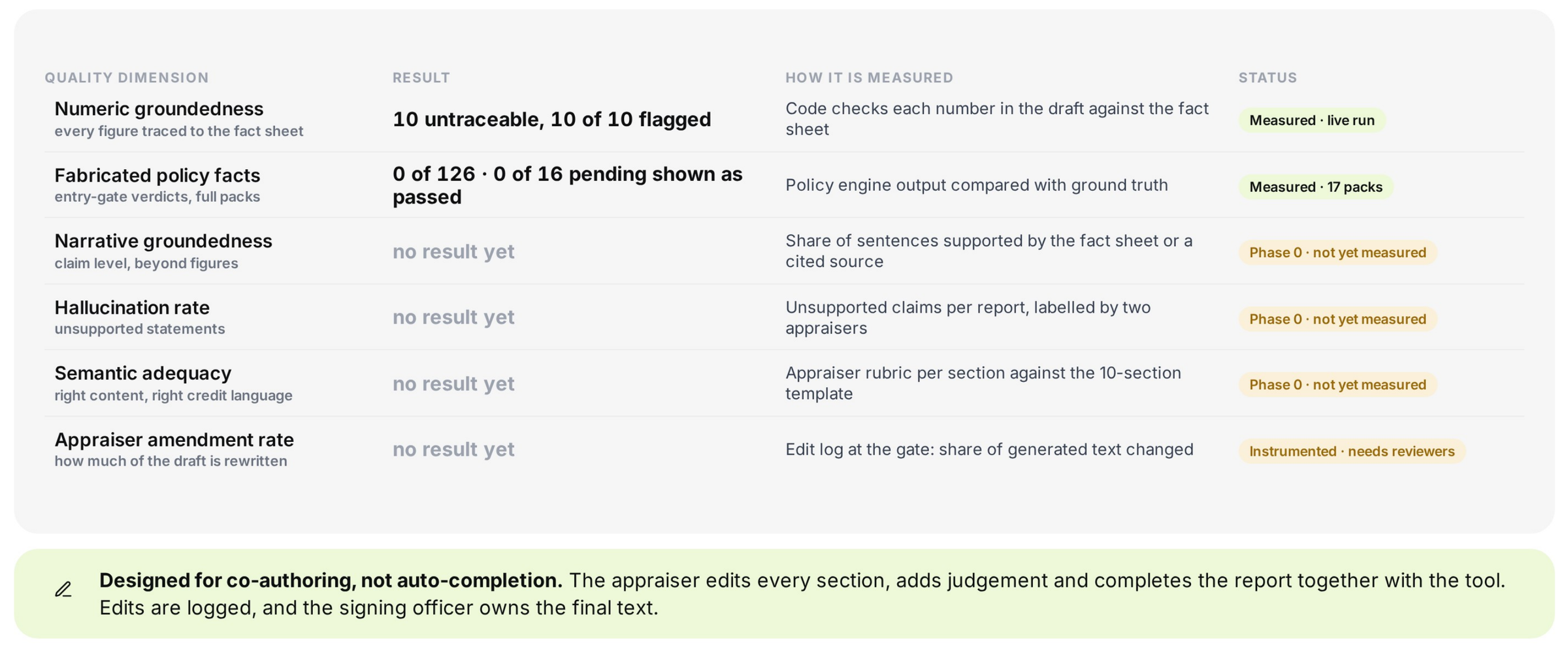
untraceable numbers flagged
Held at PENDING on sanctions, internal rating and owner screening until an officer added them, then ELIGIBLE. The model wrote 10 invented figures despite instructions; confirmation was blocked until they were acknowledged.
F7 Finding 7 · iteration 3
The model invented figures; the number check caught all ten
In a live run the model invented ten figures; the number check flagged and blocked all ten.
1 · Model drafts
Revenue grew to 129.8 bn, while the current ratio stood at 1.62.
Collateral covers 140% of the limit; inventory turns 5.1× a year.
Charter capital is 11.50 bn.
commentary should use placeholders; it still wrote figures
2 · Code checks every number
129.8 bnin the fact sheet
1.62not traceable
140%not traceable
5.1×not traceable
11.50 bnin the fact sheet
illustrative sentences · live run flagged 10 of 10
3 · Confirmation blocked
10 / 10untraceable figures flagged
Confirm memoblocked until each flag is acknowledged
No stage is fully accurate; each error type we observed is paired with a control
Extraction 99.5%, red-flag recall 100%, precision 50%, masking 73%, each with its control.
Stage and measure
Result
In absolute terms
Control designed to catch it
Extraction · S2recommended, in-perimeter
99.5%
2 wrong of 375
Review gate shows each field with its source; reconciliation
Extraction · F1external, masked
100%
0 of 375
As above; external only through masking
Extraction · S1 / S3 / S4smaller or larger tiers
76.8–97.3%
87 / 10 / 57 wrong
Not recommended
Red-flag recall · S211 planted flags
100%
0 of 11 missed
Analyst disposes of every flag
Red-flag precision · S2
50%
11 false alarms / 15 files
Analyst dismisses at the gate
De-identificationheld-out set
73%
6 of 22 missed
Egress scanner; raw documents stay inside
04 Accuracy achieved
Full credit packs are harder, but nothing was invented
Key figures 79.5% on 17 full packs, red-flag recall 93.1%, and none of 126 unknown facts invented.
Stage and measure
Result
In absolute terms
Control designed to catch it
Memo figuresiteration 3, live
10 untraceable
10 of 10 flagged
Confirmation blocked; four-eyes approval
Key figures · full packsiteration 3, S2, 17 packs
79.5%
median pack 94%; 3 packs ×1,000,000
Review gate; magnitude check to add (R5)
Business red flags · recallfull packs
93.1%
2 of 29 missed
Analyst reviews the whole pack
Business red flags · precisionfull packs
69.2%
12 false
Analyst dismisses at the gate
Entry-gate verdictfull packs
94.1%
1 of 17 eligible shown pending
Officer completes pending items
Invented facts / pending shown as passed
0 / 0
of 126 / of 16
Policy engine: unknown → PENDING
04 Report generator
Report generator: figures are grounded by construction; narrative quality is measured next
Figures and policy facts are measured; narrative quality and hallucination rate are Phase 0 measures.
04 Acceptability
Under maker–checker, the model acts as maker and named staff remain checkers
Extraction is acceptable with review, red flags one way only, masking never as the only control.
The question is not whether the model is perfect, but whether each error type is (a) rare enough that checking beats re-keying and (b) visible to the checker.
Acceptable with review
Field extraction
At 99.5% the analyst confirms rather than re-types. On full packs (79.5%), checking every decision-critical figure is mandatory. Accuracy here measures review workload, not appraisal accuracy.
Field accuracy, S299.5%
Key figures, full packs79.5%
black tick = pilot threshold
Pilot thresholdDecision-critical fields ≥ 99% per family, 100% verified at the gate
Acceptable one way
Red flags
Recall must be complete, and it was (11 of 11). 50% precision is tolerable short-term but would erode trust in production, so it is the first development target.
Recall100%
Precision50%
black tick = pilot threshold
Pilot threshold100% recall on a regression suite, ≥ 70% precision
Not as the only control
De-identification
An identifier that leaves the bank cannot be recalled. At 73% held-out recall, raw documents stay inside; only structured, harness-generated fact sheets go out.
Held-out recall73%
black tick = pilot threshold
Pilot threshold≥ 99% held-out recall, only if raw text leaves
04 Proposed thresholds for a bank pilot
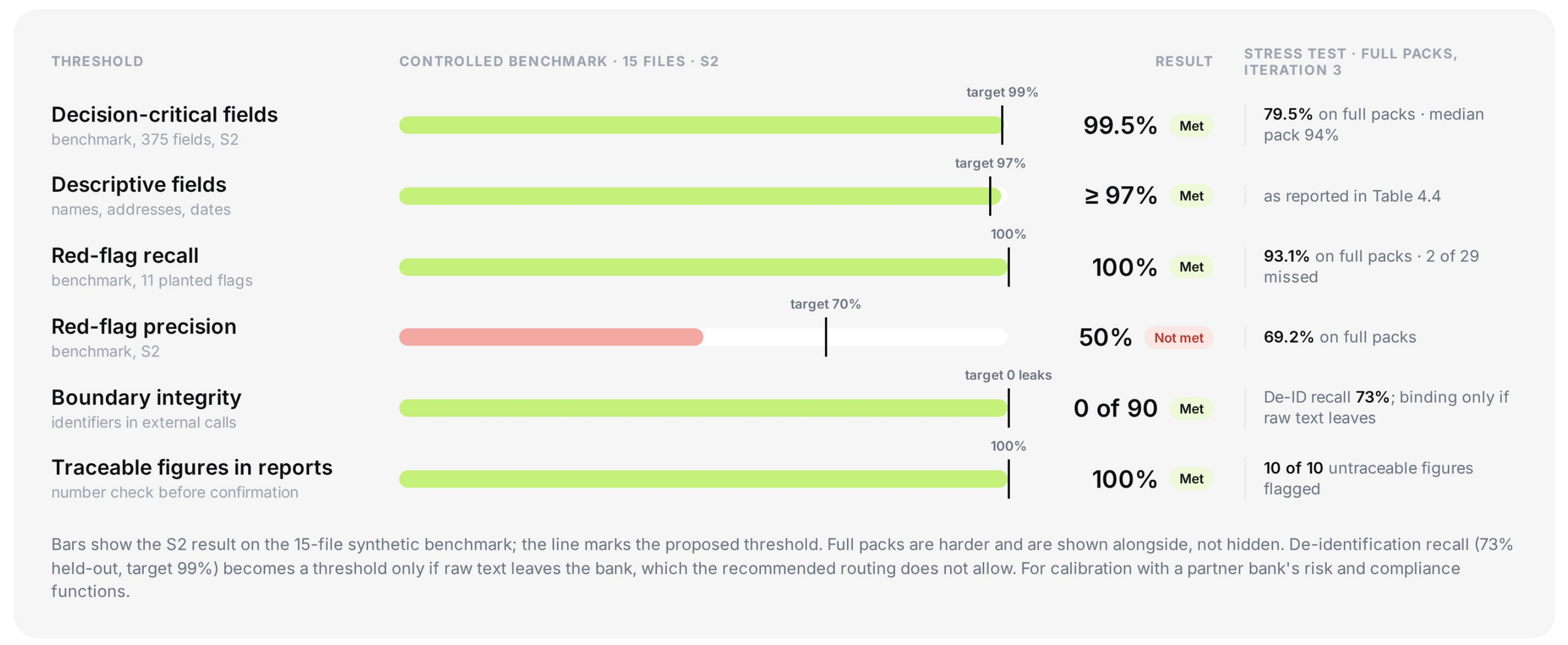
Five of six proposed pilot thresholds are met on the controlled benchmark
Met: accuracy, descriptive fields, recall, boundary, traceability. Not met: precision at 50%. Full packs shown alongside.
Prototype The governed workflow
The governed workflow halts at a mandatory human review gate
One action runs the pipeline; nothing moves on until a person dispositions every field.
1Document intakeL1
2De-identifyL3 · tokens
3Extract fieldsS2 · inside
4Reconcile and ratiosL2 · code
5Sector researchF1 · public
6Human review gatestops here
Company name
source: registration
AcceptAmend
Tax code
source: registration
AcceptAmend
Charter capital
source: registration
AcceptAmend
Total assets
source: balance sheet
AcceptAmend
28 / 28 fields dispositioned
gate opens →
Fact sheet[ORG_1] · ratios · flags
Draft memoF1 writes; code fills numbers
Credit officer decides
ApproveWith conditionsDeclineRefer
1 · Pipeline
Intake, masking, extraction, reconciliation and research run under the orchestration policy, each step with its tier and time.
2 · Review gate
Every field shown with its source and confidence. Accept, amend or reject before a memo can be drafted. Time and decisions logged.
3 · Memo and decision
Drafted from a masked fact sheet. Approve, approve with conditions, decline or refer stays with the credit officer.
04 Outcomes
Three of four objectives were achieved; the manual baseline remains outstanding
Framework achieved, prototype substantially achieved, tiering achieved on synthetic data; no manual baseline yet.
O1Not met
Quantify the manual burden
2 of 4 delivered
✓Interview protocol
✓Sampling frame
×Practitioner interviews
×Measured baseline
No partner access yet; the baseline is placed first in the roadmap.
O2Achieved
Specify the framework
4 of 4 delivered
✓Task capabilities
✓Orchestration harness
✓Compliance guardrail
✓Deployment approaches
Three layers specified and implemented in the prototype.
O3Substantially
Build and evaluate a prototype
3 of 4 delivered
✓End-to-end workflow
✓Field accuracy
✓Latency
…Amendment rate, cycle time
Instrumented; waiting for real reviewers.
O4On synthetic data
Model-tiering method
3 of 4 delivered
✓Five tiers evaluated
✓Capability frontier
✓Minimum sufficient tier
…Real bank documents
Re-run on the partner bank’s anonymised documents.
04 Outcomes
Four deliverables and the success criteria
Prototype, corpus, reproducible harness and tiering recommendation; 3 of 4 success criteria met.
Live prototype, recorded 21 Nov 2026 · six synthetic PDFs for SME-009 (Công ty TNHH Gỗ Kim Long) · waiting steps sped up ×10 · extraction ran on S3 because the provider retired the S2 model on 20 Nov 2026